Lead Article
Protected Here, Taxed There
In one batch of notifications the Finance Ministry shielded India’s seamless tube makers from cheap imports, then taxed the metallurgical coke that Indian steelmakers burn to make steel. Both duties are called protection. Somebody further down the supply chain pays for each of them.
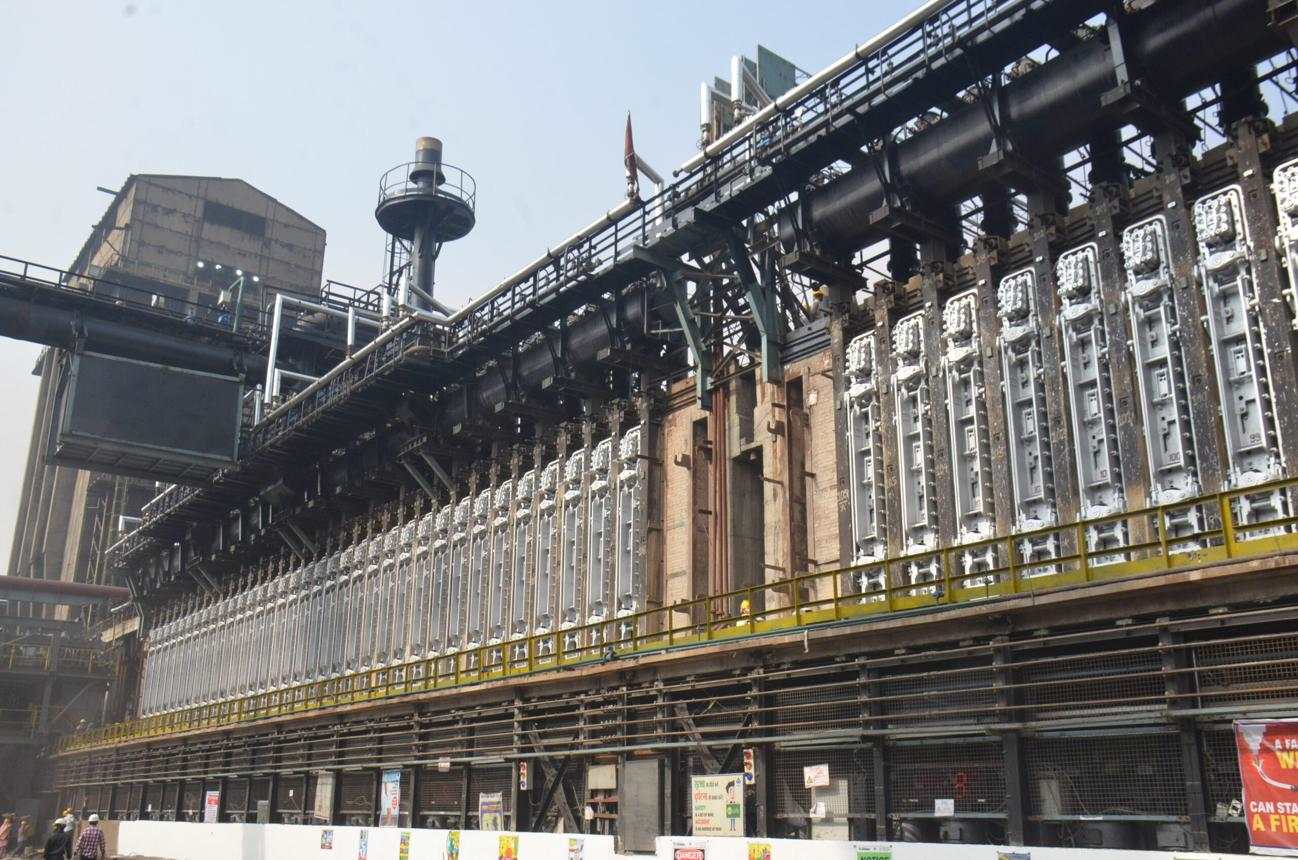
In late July, the Finance Ministry protected an industry and taxed it in the same batch of notifications. It extended the anti-dumping duty on seamless steel tubes and pipes, shielding Indian tube makers from cheap imports. Days later, it imposed a fresh five-year duty on metallurgical coke, the fuel those same steelmakers use to make steel. The same government, in the same industry, was protecting one set of producers while raising the costs of another.
Defining an anti-dumping duty is fairly straightforward. A foreign company sells a product in India at a price below what it charges in its home market. Indian producers complain, the Directorate General of Trade Remedies investigates, and the Finance Ministry can then choose to make those imports more expensive. The stated goal is fair competition. No domestic producer should have to compete against a foreign company deliberately selling below cost to drive it out of business. That is a reasonable argument, and there are cases where predatory pricing is a genuine concern.
A company that can afford to lose money on every unit sold in India, wait for its competitors to disappear, and then raise prices has a strategy that can hurt consumers as well as producers. Calling that unfair is not unreasonable.
But India’s anti-dumping rules go beyond that. An import can attract a duty simply because it is being sold in India for less than the price charged by the foreign producer at home. The foreign company does not necessarily have to be trying to bankrupt an Indian competitor.
That distinction matters.
A foreign producer may have lower costs. It may have a currency advantage. It may be operating in a market where prices happen to be lower. Or, in some cases, its own government may be subsidising production.
Milton Friedman had a deliberately blunt response to that last case: if another country’s taxpayers want to subsidise what Indians buy, the sensible response is gratitude, not a tariff.
The seen and the unseen
The metallurgical coke duty shows why the protection argument becomes complicated once you follow the supply chain.
The duty protects Indian coke producers from cheaper imports from countries including Australia, China, Colombia, Indonesia, Japan and Russia. That sounds like a straightforward case of protecting a domestic industry. But steelmakers buy coke. They need it to produce steel. So when the government makes coke more expensive, it raises the costs of the very steelmakers that another anti-dumping duty is trying to protect.
This is the kind of second-order effect that Frédéric Bastiat wrote about and Friedman repeatedly brought into economic policy debates. The visible effect of the coke duty is a protected Indian coke industry. The less visible effect is higher costs for Indian steel producers further down the supply chain.
A duty on untreated fumed silica protects domestic chemical producers while raising costs for paint, cosmetic, and pharmaceutical companies that use it. A duty on arylides protects dye manufacturers while increasing costs for printing and textile firms. A duty on normal butanol protects a domestic producer while raising costs for companies that use it in products such as flavours and cosmetics.
None of these cases require us to assume that the industries asking for protection are acting in bad faith. They are responding to their own interests. If cheaper imports threaten their business, they have every reason to ask the government for protection.
Concentrated benefits, diffuse costs
The problem is that the costs are spread across everyone else in the supply chain. The paint manufacturer buying fumed silica does not necessarily have the same incentive to appear before the government and argue against the duty. Neither does the textile producer buying arylides or the steelmaker buying coke.
That creates a built-in political asymmetry. The benefits of a duty are concentrated among a relatively small group of producers. They have a strong incentive to organise, hire lawyers, file complaints, and lobby for protection. The costs are spread across thousands of firms and millions of consumers, each paying a little more.
This is one reason protection can keep expanding even when the economy as a whole may be worse off. Friedman’s argument went further than simply proposing a better anti-dumping law with a stricter test for genuine predatory pricing. He questioned the usefulness of the entire instrument.
His concern was that once governments create a legal mechanism for producers to complain about “dumping,” ordinary differences in costs and prices can become grounds for protection. And if the rules were made narrow enough to catch only genuine predatory pricing, the instrument would probably become too difficult for producers to use in practice.
The steel example captures the problem rather neatly.
The tube industry gets protection from cheap imports. The steelmakers using metallurgical coke then face a new tax on one of their main inputs. The government may be protecting the finished product while making it more expensive to produce. Somewhere further down the supply chain, another Indian manufacturer pays the bill.
Scrapping anti-dumping duties would not mean ignoring unfair competition. It would mean accepting that Indian producers should compete with foreign producers on price, quality, and productivity rather than asking the government to raise the price of imports.
The Indian state should remember that when foreign taxpayers and governments are willing to subsidise something that an Indian factory wants to buy, the best response should be to say thank you and let firms engage in voluntary exchange.