Opinion
The Prime Minister Who Wept on Independence Day
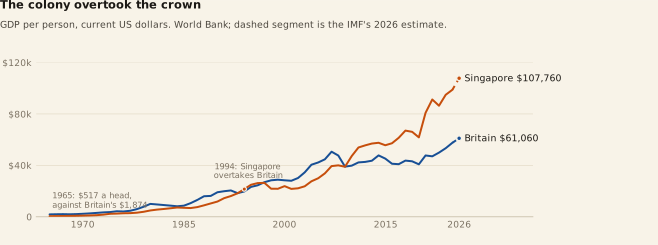
Singapore turns 61 this week richer than the empire that once governed it. The secret of the small rich state is not tax, and it is not luck. It is a government that knows its people can leave.
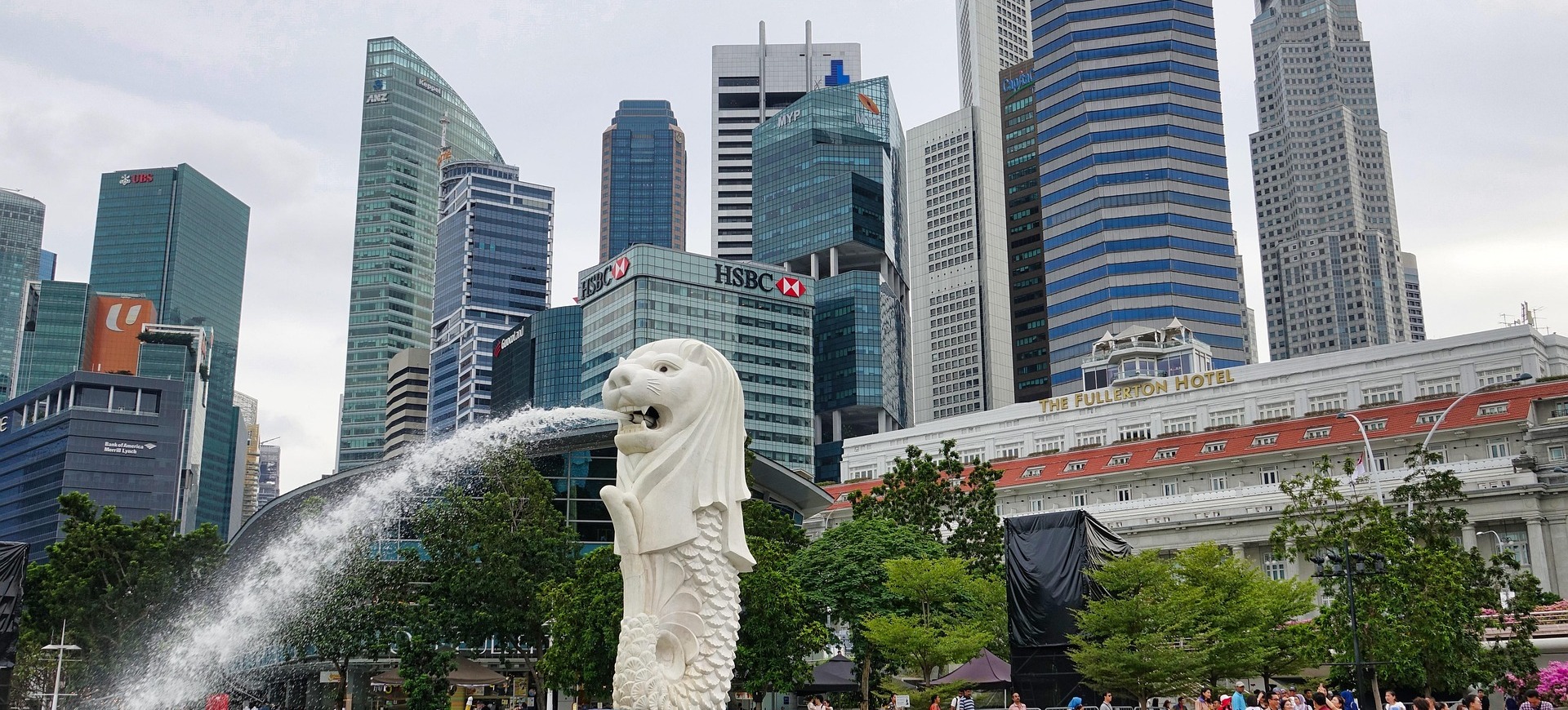
On the morning of August 9, 1965, Lee Kuan Yew went on television to tell Singaporeans that their country was now independent, and he cried. New nations usually celebrate their birth. Singapore’s first prime minister grieved his, because the country he now led was a swampy island with no oil, no farmland, and no drinking water it could call its own. This Sunday that island turns 61. The country whose own leader mourned its independence now earns about $99,000 per person each year, by the International Monetary Fund’s count, nearly double the figure for Britain, which once governed it as a colony.
Small, rich, and no accident
That result should embarrass the theory of wealth most of us grew up with. Wealth is supposed to come from size: from farmland and oil, and from a home market big enough to buy whatever you make. By that theory, an island you can drive across in an hour was supposed to stay poor. Singapore turns out to be the rule. Liechtenstein, an Alpine state whose entire population could sit in Wembley Stadium with half the seats still empty, has the highest income per person on earth. Luxembourg, with fewer residents than a mid-sized city, is just behind it.
Tax shelters, you might say: money with a mailbox. For a few micro-states that is fair, and worth saying plainly. It cannot cover Singapore, which hosts one of the busiest ports on earth and one of the world’s great oil-refining centers without pumping a single barrel of its own. The tax story also arrives about twenty-five centuries too late. Athens, a single quarrelsome city, produced ideas that still shape modern constitutions. Venice, built on mud flats in a lagoon, ran the trade between Europe and the East for centuries, and elected its rulers while the rest of the continent crowned them.
Exit is the secret
What these places share is a government that could lose its people. A merchant who disliked Venice could sail for Genoa, and a craftsman squeezed by one Greek city could walk to the next. That exit is the secret. A government that can lose its people has no choice except to protect and serve them, and a government whose land holds no oil and no mines has nothing left to invest in except those same people.
The contrast explains a darker pattern as well. A state with oil under its feet can afford to neglect the people standing on it, because the oil pays the government either way; a state with nothing underfoot has to build schools. Smallness sharpens the effect. A leader ten kilometers from a broken drain hears about it; a capital a thousand kilometers away reads a report about it, eventually. Singapore built housing and schools at a pace big countries still study, partly because its voters lived down the road and its rivals were an hour’s flight away.
The strongest witness for this idea is the largest country on earth. In 1978 Deng Xiaoping toured Singapore, went home, and opened zones where a few Chinese coastal cities could trade under looser rules and behave, in effect, like little Singapores. Those zones became the engines of China’s rise.
The lesson, cut to size
The honest case against all this deserves a hearing. Small states live under the protection of warships they do not pay for, and they can be swallowed whole; Japan needed one week in 1942 to take Singapore. And nobody has shown how to govern three hundred million people like a harbor town. Every one of those objections stands. Together they shrink the lesson to a size a careful reader can carry: this is a story about what competition does to the people who govern us, wherever they govern.
So the next time a tiny state tops an income table, read the number as information about how a government behaves when its residents can leave, and then ask of your own government what it would do differently if you could. Most of us cannot leave, which is exactly what makes the question worth asking. Sixty-one years ago a prime minister wept on camera because everything of value had been stripped from his country except its people. A government left with nothing but its people learns to take very good care of them.