Lead Article
The Most Expensive Feedback Form in India
The Cockroach Janta Party won every demand it made, then handed the government a five-point charter that would make the next leak worse. The trouble was never that the entrance exam is badly run. It is that there is only one.
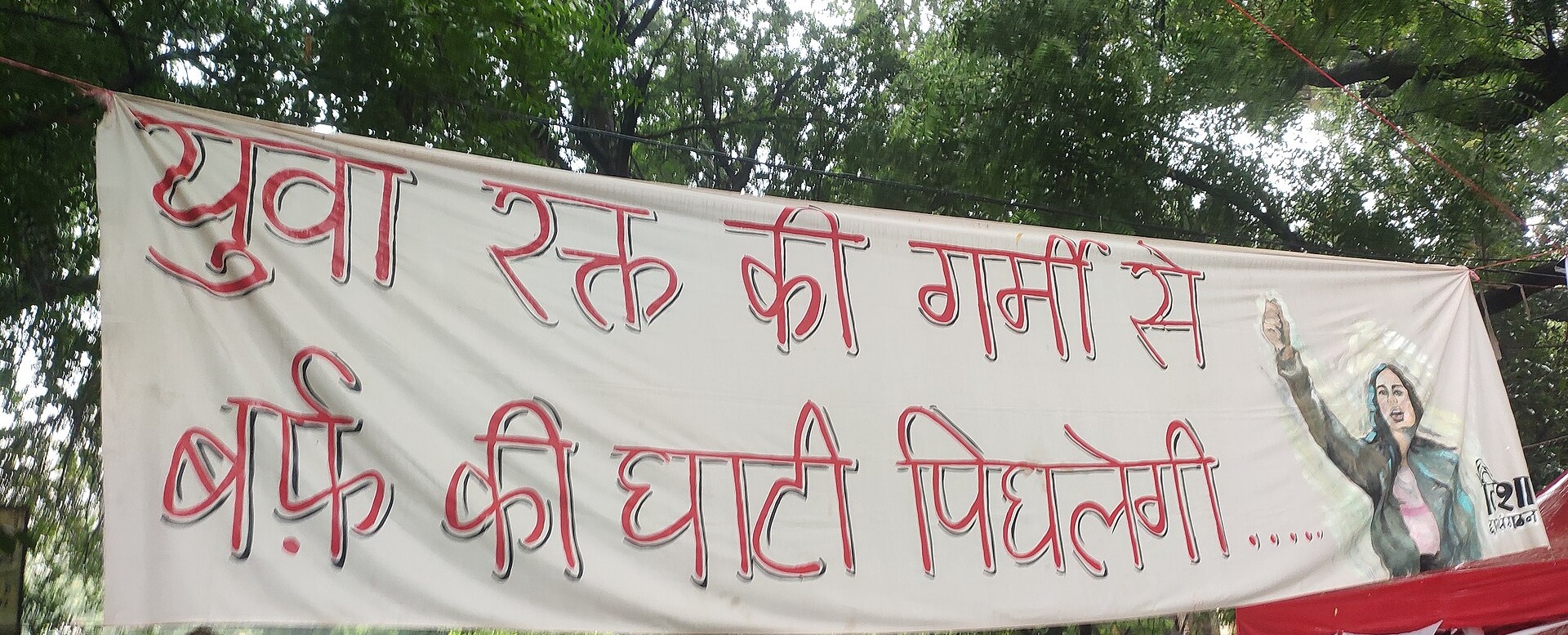
The Cockroach Janta Party is named for an insult. In May the Chief Justice of India compared jobless young Indians to cockroaches in open court. Within a day, Abhijeet Dipke, a thirty-year-old political-communications strategist, had turned the remark into a party name that parodies the ruling party’s, under the slogan “Voice of the Lazy and Unemployed”. Volunteers marched in cockroach costumes. When the government banned the party’s account on X, Dipke opened a new one and observed that cockroaches don’t die.
By July the parody had more Instagram followers than the BJP. Over seven weeks of monsoon at Jantar Mantar, it survived tear gas and lathi charges and became the first student protest of the BJP era to win everything it asked for; then it disbanded. Sonam Wangchuk ended his 26-day hunger strike on 23 July, once the government put its assurances in writing; Dharmendra Pradhan resigned as Education Minister two days later; the government agreed to pay ₹1 crore to the family of each student who died by suicide after the paper leak, and to withdraw cases against peaceful protesters.
Before disbanding, the CJP handed the government a five-point reform charter and promised to return in three weeks to check on it. It asks for ten-year sentences for leak syndicates, a National Testing Commission set up by law to replace the NTA, annual CAG audits, fee caps on private colleges, and a permanent welfare fund for bereaved families. Every demand assumes the problem is poor administration, and every remedy is more state: a stiffer law, a new commission, another audit, a price control, another fund. The mistake, though, was to concentrate so much power in one place, which is why passing the charter would do more harm than rejecting it.
The students were right to protest. They spent years preparing for exams the state could not keep secure, and protest was the only way left to make themselves heard. Parents brought ten-year-olds to the sit-in and told Dipke they wanted the system fixed before their children’s turn came. Yet look at the cure on offer: the centralised exam system failed, so the country will build a better-run centralised exam system. Each failure of a government monopoly becomes the case for giving it more power.
Thirty small single points of failure would serve us as badly as one large one.
Exit, Voice and the Price of Being Heard
India ran this experiment before, for forty years. My generation knows it only from stories; readers older than me lived inside it. A family waited eight years for a telephone line, and once the line came, a trunk call to another city joined the queue at breakfast and came through, if it came through, by night. The same family booked a Bajaj scooter for a child not yet engaged. You could complain to the Posts and Telegraphs Department, but you could never take your money elsewhere, so your complaint cost the department nothing.
The economist Albert Hirschman named the two ways customers keep a seller honest: exit — walking out to a rival — and voice, meaning complaint and protest. Where exit is impossible, voice is all that remains, and voice is costly. Jantar Mantar is the most expensive feedback form in the country: it took a nationwide movement and a hunger strike to send a message that a market sends free every time a customer changes shops.
A Single Point of Failure
The exam monopoly has the same design, with higher stakes. A leaked university paper inconveniences one university. A leaked NEET paper upends more than twenty lakh lives, because entry to a whole profession funnels through one exam held on one day. Engineers call this a single point of failure: one part whose breakdown stops the whole machine. That design also sets the prize for crooks: middlemen priced this year’s stolen paper at ₹30 to ₹50 lakh a candidate, and a client list at those rates adds up to hundreds of crores. The crisis has two causes, and each needs its own repair: one exam guards the gate, and too few seats lie behind it.
- 20 lakh Candidates sitting NEET, against roughly one lakh MBBS seats
- ₹30–50 lakh Reported price of a leaked paper, per candidate
- 26 days Length of Sonam Wangchuk’s hunger strike
- 5 demands in the charter — each asking the government to do more
Many Exams, Not Merely Better Ones
Fix the exam first. The state has already tried guarding harder: this year’s paper travelled with GPS trackers, past 5G jammers and AI cameras, and it leaked anyway. The charter’s ten-year sentences will do no better, because they aim at the wrong number. A man running a hundred-crore racket weighs the odds of getting caught; those odds sit near zero, and a harsher sentence he never expects to serve does not change his arithmetic. Handing exams back to the states merely restores the world before NEET, whose record is Vyapam: Madhya Pradesh’s decade-long bazaar of rigged papers and bought government jobs. Thirty small single points of failure would serve us as badly as one large one.
The real repair is competition inside the system. Let universities accept scores from rival testing bodies, and let each body hold its exam several times a year. Junior colleges already work this way: they admit students from CBSE, ICSE and the state boards, because each board’s certificate carries a known reputation. A testing body whose paper leaked would lose universities and candidates to its rivals within a season, so security would become its livelihood. Private exams already operate at this scale at the exit gate of Indian education, where AMCAT, eLitmus and the TCS National Qualifier Test screen millions of job-seekers a year across repeated sittings. A mishap at any of them stays small, because each sitting is one of many.
The common objection is that rival examiners will compete by setting easy papers. The examiner’s customer, though, is the university, and a university learns within a year whether the scores it bought predicted first-year results. An examiner that inflates marks sells a broken instrument and destroys its own product.
And Many More Seats
Now consider the seats. A NEET paper is worth stealing because more than twenty lakh aspirants chase roughly one lakh MBBS seats, and the government made that ratio. India rations medical seats through licences and quotas, and it bans for-profit colleges outright: a college must register as a trust and declare that it earns nothing. The money still moved, in secret, as the “donation”. A capitation fee is what profit looks like where profit is banned.
Legalise for-profit colleges, let investors build seats in the open, and the ratio of aspirants to seats falls. As it falls, the value of any one paper collapses, and the syndicates leave the trade for the same reason burglars skip empty houses. This makes the charter’s fee caps its most dangerous demand: a price cap on a supply-starved market is the machine that produced capitation fees the first time, and the charter wants to switch it on again.
The stock reply is that for-profit colleges will become degree mills. India’s own record answers this, because our great degree mills all flourished under the state’s stamp. Many of Madhya Pradesh’s nursing colleges were fake, yet inspectors certified them; in 2024 the CBI arrested its own officers for taking bribes to do so. A college could buy approval in an afternoon, while a reputation takes decades to build. Where employers paid the price of being wrong, the market shut the mills on its own: the shoddy engineering colleges of the 2000s boom died of empty seats once TCS and Infosys learned to filter by campus and re-test every hire, and AICTE spent the next decade processing their closure applications.
Who Will Guard the Guards?
Two thousand years ago the Roman poet Juvenal asked: Quis custodiet ipsos custodes? Who will guard the guards? The charter piles guard upon guard and leaves him waiting for an answer. The braver reform shrinks the need for guards — many exams, so a leaked paper becomes one key among many, and many more seats, so a seat stops being worth a crime.